Translate

Wednesday, 6 November 2013

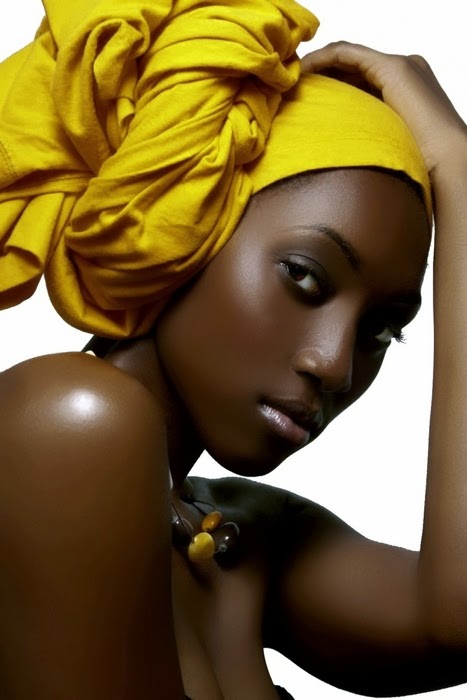
The Process on to Tie African Hair Wraps

African hair wraps are traditionally worn for social reasons and to protect the hair and scalp from hot, dry climates. The wrap is meant to secure long braids or locks, which is why you use a long rectangular piece of cloth. The cloth colors are bright and vibrant. In Africa, women of certain regions and status were identified by their head wraps. Today woman wear African hair wraps for tradition and style.


Instructions


    • 1
      Pull your hair up and away from the face. Secure the hair with pins or a ponytail wrap on top of the head. The hair wrap is worn close on the sides and loose on the top. You will get a better result if you secure your hair on the top of your head.
    • 2
      Use a rectangular piece of cotton cloth, which should be ½ to 1 yard long and six inches in width. Traditional fabrics are bright colors with prints. The Kente cloth is a West African pattern that is commonly used in African hair wraps.
    • 3
      Take the cloth and hold it in each hand against the back of the head. Slide the cloth so you have more cloth on the right side of the head than the left side of the head. Take the left side and drape it around the head and over the top of the cloth on the right you are holding.
    • 4
      Drape the right side over the left side of the cloth. Secure the right end of the cloth under the left in the back of the head. The cloth should form a "V" shape in the front of your hair. Leave the top end of the left side loose on the top of the head.


ehow

Tuesday, 5 November 2013

THE CHAMPIONS PLACE FOUNDATION PRESENTS...DARE TO BE DIFFERENT


DATE :   DEC 2nd - 13th
VENUE:  THE CHAMPIONS PLACE FOUNDATION (Nos 23 road P close, house 7, festac town), Lagos state.

for more info; call 08084987501 (Efe) , 08076681236 (Blessing), 08163108264 (Francis)

Traditional African Hairstyles

Every day in Africa is primed to be a bad hair day, with its tropical high temperatures and extreme humidity, or drying desert air. African women have long faced the challenges of such an environment by wearing their hair in the most carefree, natural way or adopting creative styles that meet its demands.


Naturals

  • At the top of the carefree hairstyle list for traditional Africa is going au natural. The "Natural" is the way African hair grows from the scalp without any chemical processing. This is usually a close-cropped style. Most people recognize this hairdo as an "Afro."
    The Afro is an Americanized term for natural hair worn longer and without the use of any heat or chemicals to tame its kinks. The Afro gained popularity in the 1960s during the Civil Rights Movement as an act of defiance against centuries of cultural oppression and an embracing of their African heritage by black Americans.
    Back on the African continent, the Afro was just called hair. It had no political aspirations other than the God-given covering for heads under the blazing hot African sun.

Tribal Hair

  • Africans, especially the tall warrior Zulu people of southern Africa, often sported center or side parts in their natural hair, showing a flair for style and hair fashion even as they traversed the African savannah hunting wild game, their source of food. Beads are the pride of the Zulu people, with different beads having distinct symbolic purposes. The Zulu often wear beads to adorn their natural hair, with multiple strands used as jewelry.
    Other African tribes such as the Himba from north Namibia, a desert province, make a red-colored ointment from butter, ash, red ochre and herbs that they apply to their hair and skin, giving them a unique reddish-brown color. Beautification is an important ritual for Himba women even as they go about living their very laborious, nomadic lives building homes, hauling firewood, tending livestock and taking care of children.
    Surma and Mursi tribes of East Africa's Omo Valley create high fashion including head coverings from the wild trees, exotic flowers and lush vegetation of the area bordering Ethiopia, Kenya and Sudan. These tribal women create natural looks for the hair that any Western haute couture designer would envy.
    In deference to traditional cultures across the continent, many Africans both tribal and urban wear hair coverings. Scarfs are a mainstay of the African hairstyle, acting as hair and head covering and fashion statement in one. Whether intricately tied and used to coordinate with a fashionable ensemble, adorned as protection against the sun, or as part of the Muslim practice of covering the bodies of women, scarfs are a traditional part of the African hairstyle.

Ehow

African Hairstyles for Men Part 2

People of African descent tend to have coarse, very curly hair that's flattered by specific hairstyles. This has been especially difficult for men. For the longest time, men of African descent were limited either to plain cropped hair or flamboyant styles associated with rap, reggae or ethnic African tribesmen.


But at the turn of the 21st century, much has changed. Forget the hair-raising afro-halo, long Jheri curls, cornrows or the "hi-top fade." According to AskMen Online Magazine, today's African hairstyles ideas for men are modern, sophisticated, and can suit a wider range of personalities.

360 Waves

  • This hairstyle literally forms a visible pattern of close-cropped, tight, uniform waves and ridges of hair around the head. This is achieved through the aid of special pomades, brushing and sleeping in a special wave cap or "durag." Dramatic without being over the top, this hairdo is best for men a casual, more flamboyant personality.

Mini-'Fro

  • This is literally the much shorter, toned-down version of the '70s disco afro. It may look casual, but it requires careful cutting and styling for hair to achieve the same rebellious stand, without making a mess. Rock singer Lenny Kravitz sports this hairstyle. To make this look work, it's best to pair it with a trendy wardrobe--perfect for a stylish, risk-taking man.

Short Dreads

  • If you like the bravado of Jamaican dreadlocks, but hate long unkempt hair, you can try "short dreads" instead. Just like the Bob Marley hairdo of old, hair is sectioned off into locks, and allowed to grow. But instead of a long mane, hair is grown to only a few inches off the scalp, creating a subtle shock of locks. You can take your inspiration from Uti who wears this hairdo with style. This look is best for laid-back, urban hipsters.
Ehow

African Hairstyles for Men Part 1

People of African descent tend to have coarse, very curly hair that's flattered by specific hairstyles. This has been especially difficult for men. For the longest time, men of African descent were limited either to plain cropped hair or flamboyant styles associated with rap, reggae or ethnic African tribesmen.


But at the turn of the 21st century, much has changed. Forget the hair-raising afro-halo, long Jheri curls, cornrows or the "hi-top fade." According to AskMen Online Magazine, today's African hairstyles ideas for men are modern, sophisticated, and can suit a wider range of personalities.


Classic Cut

  •  Hair is cut to a length and volume that adds to or flatters the overall shape of the skull, yet is short enough to remain unaffected by wind or movement. This hairstyle suits conservative, traditional personalities.

Sculptured Shave

  • This is the black man's military buzz cut, except it's got a highly-sculptured hairline. You get the same freedom associated with going bald, while still having hair that can go anywhere from red carpet to street. This will suit men who want to look like a fashionable rake, without the fuss.
    You'll need a skilled barber to get this suave hairstyle. The key is in getting an even close shave throughout your head, and in shaving a sharp, well-defined hairline to frame your face shape properly.

Monday, 4 November 2013

How to Do Women's 1920's Hairstyles

The 1920s brought with them a revolution in women's hairstyles. Women during this era began cutting their hair into short "Castle bobs," following the trend started by dancer Irene Castle. This rebellious change in hairstyle, from long beautiful locks to blunt cuts, gave birth to one of the most famous 1920s hairstyles -- finger waves. Finger waves were commonly used on short hair. To accomplish this hairstyle, women pressed their fingers into damp hair to make soft wavy sections. Another common hairstyle was the sleek bob, which anyone who has a modern day bob-like haircut can create.


Instructions


  1. Finger Waves

    • 1
      Thoroughly wet your hair and dry it to the point it is damp.
    • 2
      Comb a liberal amount of gel into your hair and part the hair far over to one side.
    • 3
      Place your finger beside the part on the side with the most hair, and drag the teeth of the comb sideways along your finger until the outline of the first wave forms.
    • 4
      Lay the comb so it lies against your scalp, and place a second finger beside the finger already in place to hold the ridge down. Comb the hair in the opposite direction of the curve of the ridge. The placement of your finger will determine how far down the ridge will be.
    • 5
      Continue the same steps to make another wave beneath the one you just made. Continue making ridges using this technique until you have the number of waves you want.

    Sleek Bob

    • 6
      Wash and dry your hair thoroughly. Use a shampoo that does not contain harsh chemicals, detergents or a long list of alcohols or sulphates, which can decrease shine.
    • 7
      Plug in your hair straightener and allow it to fully heat up. As it warms up, apply a protective spray to your hair to prevent it from being damaged from the heat.
    • 8
      Straighten your hair, working on a small section at a time to ensure it is perfectly straight. Continue until every section is completely straight. Part the hair down the middle using the end of a comb.
    • 9
      Apply a shine-enhancing serum to your palms, rub them together, and smooth the serum over your hair to reduce the appearance of fly-aways and to give your bob added shine.

Ehow

Saturday, 2 November 2013

How to Use Eggs as a Hair Treatment

Try an egg for a natural hair treatment.

Egg whites are almost entirely protein, and can fortify the hair shaft, adding strength to hair that's been damaged by chemicals or heat. Not only is egg good for your hair, it's easy on your wallet, costing much less than store-bought conditioners. An egg treatment can make your hair shiny and silky. If you appreciate natural ingredients in your hair care products, try an egg treatment.

Difficulty:

Easy

Things You'll Need:

Egg

1 . Honey

1 . Plain yogurt

Instructions

Crack an egg into a bowl. Mix it up with a fork until it's fluffy.

Add 1 tbsp. of plain yogurt and 1 tbsp. of honey to the bowl. Mix everything together well.

Pour the mixture onto clean, damp hair and massage it in. Wind all your hair around the top of your head and place a plastic shower cap over it. Wait 30 minutes.

Rinse the egg mixture out of your hair with cool water. Cool water should make your hair shiny and will rinse the egg out better than warm or hot water will. Style your hair as usual.

Tips & Warnings

Warm or hot water may cook the egg, and you may find small pieces of scrambled egg in your hair.